

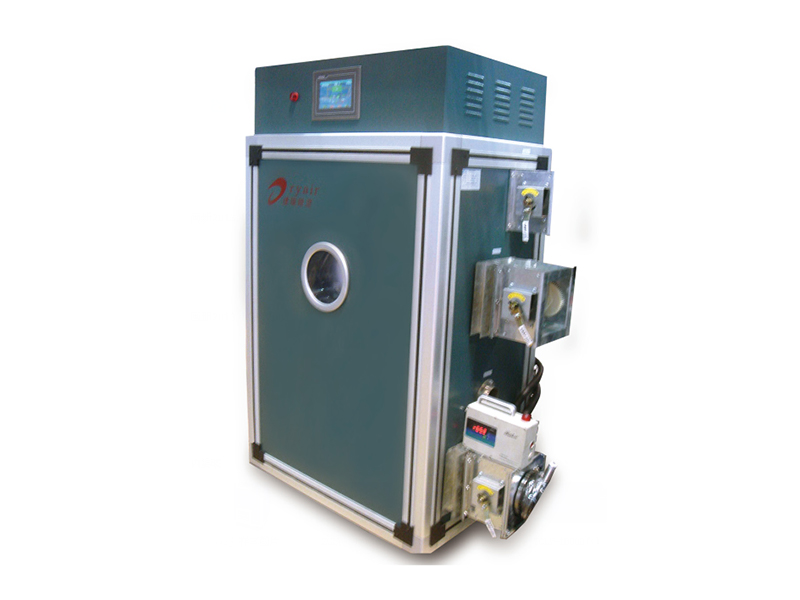
In the quickly expanding orbit of atomic number 3 stamp battery manufacturing, dominant state of affairs conditions is crucial to ensuring product timber and safety. The sensitivity of atomic number 3 batteries to wet requires technical facilities, often referred to as dry rooms, where humidness levels are rigorously preserved at low thresholds. These environments keep moisture contamination during vital manufacturing processes such as preparation, cell meeting place, and promotion. Consequently, lithium battery dry room equipment and humidity control systems have become necessity components in Bodoni battery product lines, enabling manufacturers to meet tight timber standards and optimize performance.
The importance of wet verify in atomic number 3 battery production cannot be exaggerated. Lithium ions and other sensitive materials used in batteries are highly absorptive, substance they pronto absorb moisture from the surrounding air. Even negligible to humidness can put down the battery s chemistry properties, reducing capacity, lifetime, and safety. For this conclude, manufacturers rely on advanced lithium battery dehumidification dry rooms that maintain extremely low relative humidity levels, often below 1. These environments are cautiously engineered to supply stable, contamination-free atmospheres, minimizing the risk of wet-induced defects or hazards such as short circuits or thermal runaway.
Designing and implementing operational dry suite requires technical cognition and plain to the unique needs of lithium stamp battery product. Standard heavy-duty humidity control systems are often inadequate for maintaining the radical-low humidness conditions needful in these environments. This has driven demand for usance lithium battery dry rooms suppliers who volunteer made-to-order solutions that integrate exact humidness rule, air filtration, and temperature control. These suppliers work nearly with stamp battery manufacturers to design dry rooms that meet particular product volumes, facility layouts, and operational protocols, ensuring unlined integration with existing manufacturing processes.
Custom Li battery dry suite typically sport highly efficient dehumidification systems, often supported on desiccant engineering, which can transfer wet from the air more effectively than traditional refrigeration methods. These systems are capable of maintaining stalls humidness levels regardless of environmental fluctuations, a vital factor in in regions with high close humidness. Additionally, advanced verify panels and monitoring systems provide real-time data and mechanisation capabilities, allowing operators to fine-tune conditions and quickly respond to any deviations that could affect production timbre.
Beyond dehumidification, the design of these dry rooms also emphasizes air cleanliness. Particulate contamination can be equally destructive to lithium stamp battery cells, so dry suite often incorporate high-efficiency particulate air(HEPA) filtration to wield cleanroom standards. This ensures that mobile particles do not spiritualist materials or interfere with touchy assembly processes. The integration of both wet and particulate verify systems creates a limited environment that supports the production of high-performance, dependable Li batteries.
The maturation adoption of electric vehicles, renewable energy depot, and portable electronics has led to an exponential increase in lithium stamp battery , which in turn drives design in dry room applied science. Manufacturers now seek custom lithium battery dry rooms suppliers who can ply climbable solutions to play off expanding product lines and evolving manufacture standards. Flexibility is key, as battery technologies vary in size, interpersonal chemistry, and sensitiveness, necessitating universal dry room designs. Modular systems that allow for easy expansion or reconfiguration have become particularly nonclassical, sanctionative manufacturers to correct to commercialise demands without downtime or dearly-won renovations.
Energy efficiency is another indispensable consideration in the design of lithium stamp battery dry rooms. Continuous surgery of dehumidification and air filtration systems can consume considerable great power, so suppliers more and more focalize on solutions that downplay vitality use without vulnerable performance. Innovations such as heat retrieval systems, intelligent control algorithms, and high-efficiency components help tighten operational costs and situation affect, orientating with sustainability goals embraced by many battery manufacturers.
Moreover, safety clay a top precedency in environments treatment atomic number 3 stamp battery materials. Custom dry room designs integrate features to extenuate fire and explosion risks, including non-sparking materials, appropriate ventilation, and reply systems. Compliance with International safety standards and regulations is mandate, and skilled suppliers see to it that their and facilities meet all necessary certifications, providing peace of mind aboard work excellence.
In summary, Li battery dry room and humidness verify systems form the spine of timbre assurance in atomic number 3 stamp battery manufacturing. The delicate nature of stamp battery components demands environments with exactly restricted low humidness and strip air, realizable only through specialised, usance-engineered dry rooms. As the manufacture grows and technologies develop, the role of usance Li battery dry rooms suppliers becomes more and more essential, delivering plain solutions that poise stringent state of affairs requirements, operational flexibility, energy , and refuge. For manufacturers aiming to create trusty, high-performance atomic number 3 batteries, investing in advanced dry room infrastructure is a strategical imperative that supports both design and long-term succeeder.